Hotel Email Marketing Examples – Real Campaigns That Boost Bookings

By: Frank DePino | May 11, 2026


The best hotel email marketing examples are tied to one clear guest moment, forming the foundation of effective email marketing for hotels, including welcome, booking confirmation, pre-arrival, cart abandonment, in-stay, post-stay, or win-back.
The strongest hotel email campaigns do not send the same message to every guest, aligning with proven hotel email marketing best practices around segmentation and personalization.
They match the offer, timing, and CTA to where the guest is on the booking journey.
This guide breaks down real hotel email marketing examples by guest journey, helping refine your overall hotel email marketing strategy for better targeting and performance.
Key takeaways:
- Hotel email marketing examples work best when each email has one clear job, such as confirming a stay, recovering an abandoned booking, or bringing past hotel guests back.
- Newsletters still perform well, especially when they promote local events, special offers, and updates tailored to hotel guests.
- Automated emails like cart abandonment and cancellation recovery can drive stronger booking action than one-time blasts.
- Each hotel email marketing campaign should be judged by open rate, click-through rate, conversion rate, room nights booked, and revenue per send.
- Better segmentation and cleaner email lists improve relevance, inbox placement, and campaign performance.
Download Our FREE Guide
Outrank OTAs & Drive Direct Bookings With Our Hospitality Digital Marketing Guide
Discover how top hospitality brands grow their online presence, attract high-value guests, and increase direct revenue—without over-relying on third-party platforms.
What do hotel email benchmarks say about what works right now?
Hotel email benchmarks show that both one-time campaigns and automated guest-journey emails still matter across key marketing channels, supporting a well-rounded hotel email marketing strategy.
Newsletters are strong for awareness and engagement, while cart abandonment and cancellation recovery emails are stronger for booking recovery.
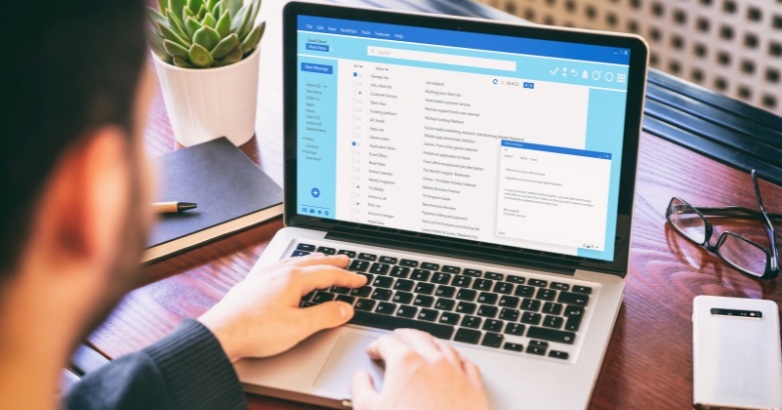
Revinate’s global hotel email data shows that newsletters lead one-time campaign engagement, with a 33.60% open rate and 2.15% click-through rate.
That makes newsletters useful for keeping past guests aware of seasonal offers, loyalty program perks, and driving traffic to targeted landing pages.
For revenue recovery, automated emails are often more direct. Revinate’s global data shows that cart abandonment emails convert at 6.86%, while cancellation recovery emails convert at 5.95%.
These numbers matter because both emails target guests who already showed booking intent.
Hotel email benchmark snapshot
| Email type | Best for | Benchmark to know | What it means |
| Newsletter | Awareness, offers, local events, loyalty updates | 33.60% global open rate | Strong for staying visible with past and future guests |
| Newsletter | Clicks to landing pages and offers | 2.15% global click-through rate | Good content still needs a clear CTA |
| Cart abandonment | Recovering unfinished bookings | 6.86% global conversion rate | Best for guests who started booking but did not finish |
| Cancellation recovery | Recovering canceled reservations | 5.95% global conversion rate | Best for warm leads who may still travel |
The main takeaway is simple: hotels should not rely on one monthly email blast. A strong hotel email marketing strategy needs both broad communication, such as newsletters, and automated revenue recovery flows, such as cart abandonment and cancellation recovery.
What are the best hotel email marketing examples before the stay?
The best pre-stay hotel email marketing examples include welcome drips, booking confirmations, and pre-arrival upsells, forming essential types of emails in any hotel email marketing campaign.
What does a hotel welcome or newsletter drip email look like?
A hotel welcome drip is a short automated email sequence sent after a guest joins your email lists, helping build engagement and improve click through rates and conversions.
Its job is to introduce the property, build interest, and move the reader toward a direct booking.
Example: The July welcome drip series
The July used a three-email welcome drip for newsletter signups. The sequence introduced the brand, showed nearby experiences, and gave potential guests reasons to book direct.
The campaign recorded a 75% open rate, 6% click-through rate, and 33 room nights booked.
| Example detail | Breakdown |
| Hotel | The July |
| Email type | Welcome / newsletter drip |
| Audience | New newsletter signups |
| Subject line examples | “60-second download,” “Why care about us?,” “Where’s Wally?” |
| Offer | Brand story, local updates, reasons to book |
| CTA | Visit the hotel website and book direct |
| Result | 75% open rate, 6% click-through rate, 33 room nights booked |
Why it worked: The July did not ask for a booking in one generic blast. The hotel used a short sequence to build familiarity first, then used destination content and property updates to make the next step feel natural.
What to copy: Use a three-email sequence for new subscribers:
Email 1: Introduce the hotel and strongest booking reason.
Email 2: Show local events, neighborhoods, dining, or seasonal trip ideas.
Email 3: Add a direct-booking CTA with a clear benefit.

What should a booking confirmation email include?
A hotel booking confirmation email should include reservation details, check-in basics, contact information, and one clear next step. It should calm doubts first and sell add-ons second.
A strong confirmation email should include:
- Guest name
- Stay dates
- Room type
- Number of guests
- Check-in and check-out times
- Cancellation policy
- Property address
- Contact details
- Link to manage the booking
- Optional CTA for app check-in, upgrades, spa treatments, or personalized offers based on available customer data
Example layout to copy:
| Section | What to include |
| Header | “Your stay is confirmed” |
| Reservation block | Dates, room type, guest count, confirmation number |
| Arrival details | Check-in time, parking, address, front desk contact |
| Helpful CTA | “Plan your arrival” or “Reserve dinner” |
| Soft upsell | Room upgrade, spa treatment, airport transfer, or breakfast |
| Footer | Cancellation policy, support email, phone number |
Best for: Guests who already booked.
Trade-off: Too many offers can make the confirmation email harder to read.
Avoid if: The email hides the reservation details below promotions.
Alternative: Send a separate pre-arrival upsell email a few days later.
How do pre-arrival emails drive upsells and better guest experience?
Pre-arrival emails help hotels answer arrival questions and sell relevant add-ons before check-in. The best timing is usually close enough to the trip that guests are planning details, but early enough to act.
The sweet spot for preference-gathering pre-arrival emails is three to seven days before arrival.
For upsells, we recommend sending the upsell email around seven days before check-in and keeping transactional details in a separate pre-arrival email closer to the stay.
Strong pre-arrival offers include:
- Room upgrades
- Early check-in
- Late check-out
- Spa treatments
- Restaurant reservations
- Local events
Example structure to copy:
| Email section | Example content |
| Subject line | “Make your upcoming stay even better” |
| Opening | “Your trip is almost here. Here are a few ways to personalize your stay.” |
| Offer 1 | Upgrade your room |
| Offer 2 | Book a spa treatment |
| Offer 3 | Reserve dinner |
| Local tip | Weekend events near the hotel |
| CTA | “Plan your stay” |
Why it works: The guest has already booked, so the email does not need to create demand from zero. It only needs to make the stay easier, more personal, or more valuable.
Download Our FREE Guide
Outrank OTAs & Drive Direct Bookings With Our Hospitality Digital Marketing Guide
Discover how top hospitality brands grow their online presence, attract high-value guests, and increase direct revenue—without over-relying on third-party platforms.
Which hotel email examples recover lost bookings?
The best recovery emails target guests who already showed booking intent. Cart abandonment, cancellation recovery, and OTA win-back emails are high-value examples because they focus on guests who are much warmer than a cold email list.
How do abandoned booking emails bring guests back?
Abandoned booking emails remind guests to finish a reservation they started, using stored email addresses to reconnect with high-intent hotel guests. They work best when they are automated, fast, personal, and linked directly back to the booking path.
Example: Half Moon cart abandonment drip
Half Moon in Montego Bay used a two-part cart abandonment drip to reach guests who started booking but did not finish. The first email was sent 1 minute after cart abandonment, and the second was sent 3 days later. In one year, the campaign drove a 70% open rate, 10% click-through rate, and 780+ room nights booked.
| Example detail | Breakdown |
| Hotel | Half Moon |
| Email type | Cart abandonment drip |
| Audience | Guests who started booking but did not complete |
| Timing | Email 1 after 1 minute, Email 2 after 3 days |
| Subject line examples | “[Guest Fullname], still pondering a getaway to Montego Bay?” and “We hope to welcome you to Half Moon.” |
| CTA | Return to booking |
| Result | 70% open rate, 10% click-through rate, 780+ room nights booked |
Why it worked: The campaign responded quickly while the trip was still fresh in the guest’s mind. It also used a second message for people who needed more time, instead of relying on one reminder.
What to copy: Build a two-email abandoned booking flow:
- Email 1: Send within minutes and link back to the booking engine.
- Email 2: Send two to three days later with a stronger reason to book.
- CTA: Keep it simple, such as “Complete your stay.”
- Offer: Add a direct-booking perk only when it protects profit.
What does a cancellation recovery email look like?
A cancellation recovery email targets guests who canceled a reservation but may still be interested in the property, destination, or a future travel date. It should feel helpful, not pushy.
Example: The Evelyn Hotel cancellation recovery email
The Evelyn Hotel used an automated cancellation recovery email sent three days after a canceled booking to guests with no future reservation. The campaign won back 350+ room nights, with an open rate as high as 51% and a 3.5% click-through rate.
| Example detail | Breakdown |
| Hotel | The Evelyn Hotel |
| Email type | Cancellation recovery |
| Audience | Guests who canceled and had no future reservation |
| Timing | 3 days after cancellation |
| CTA | Come back and rebook |
| Result | 51% open rate, 3.5% click-through rate, 350+ room nights booked |
Example: Kandima cancellation recovery drip
A second example comes from Kandima, which used a two-email cancellation recovery drip: one email 1 hour after cancellation and another 5 days later, generating 118 room nights in 30 days.
Why it worked: Both examples treat canceled guests as warm leads. The hotel does not need to reintroduce the property from scratch. It only needs to give guests a reason to reconsider.
What to copy: Send cancellation recovery emails only to guests with no future stay. Exclude guests who already rebooked so the message does not feel careless.
How do OTA win-back emails turn OTA guests into direct bookers?
OTA win-back emails target guests who booked through an online travel agency and invite them to book direct next time. These emails are valuable because they can reduce future commission costs and build a stronger direct relationship.
Example: MARRAM OTA win-back email
MARRAM used an automated OTA win-back campaign sent 90 days after check-out. The email encouraged past OTA guests to book direct with room offers and promotions. The campaign reached an open rate of over 65%.
| Example detail | Breakdown |
| Hotel | MARRAM |
| Email type | OTA win-back |
| Audience | Past OTA guests |
| Timing | 90 days after check-out |
| Offer | Direct-booking room offers and promotions |
| CTA | Book direct |
| Result | Over 65% open rate |
Why it worked: The timing matched a realistic rebooking window. The guest already knew the hotel, so the email could focus on the value of booking direct instead of explaining the property again.
What to copy: Give OTA guests a clear reason to book direct next time:
- Better room selection
- Flexible booking terms
- Loyalty program access
- Property credit
- Early access to seasonal offers
Download Our FREE Guide
Outrank OTAs & Drive Direct Bookings With Our Hospitality Digital Marketing Guide
Discover how top hospitality brands grow their online presence, attract high-value guests, and increase direct revenue—without over-relying on third-party platforms.
What hotel email examples work during and after the stay?
The best in-stay and post-stay emails improve guest experience first, then support extra revenue, reviews, and repeat bookings. These emails should feel timely and service-led.
What should an on-property welcome email include?
An on-property welcome email should help guests get more value from the stay they already booked. It should include practical details, support options, and one or two relevant offers.
Use this email after check-in or on the first day of the stay.
What to include:
- Welcome note from guest services or the general manager
- Wi-Fi details
- Dining hours
- Spa treatment availability
- Front desk or text support contact
- CTA to book an experience or ask for help
Example layout to copy:
| Section | Example content |
| Subject line | “Welcome to [Hotel Name]” |
| Opening | “We’re glad you’re here. Here are a few ways to make the most of your stay.” |
| Help block | Front desk number, text line, email |
| Experience block | Spa, dining, local events |
| CTA | “Reserve a table” or “Book a treatment” |
| Footer | Property map, hours, policies |
Best for: Guests currently on property.
Trade-off: It must be genuinely useful or it will feel like another promotion.
Avoid if: Your operational details are outdated or inconsistent.
Alternative: Send separate emails for dining, spa, or events only to guests likely to care.
What makes a post-stay email bring back repeat guests?
A post-stay email should thank the guest, collect feedback, and support future engagement through post stay emails aligned with your broader hotel email marketing strategy. The best post-stay emails are short, personal, and sent soon after check-out.
Post-stay emails usually have two jobs:
- Ask for a review or guest feedback.
- Invite the guest back with a relevant offer.
A strong post-stay email can include:
- Guest name
- Thank-you message
- Review request
- Feedback survey
- Loyalty program reminder
- Return offer
- Seasonal reason to come back
- Social media prompt
Example structure to copy:
| Email section | Example content |
| Subject line | “Thank you for staying with us” |
| Opening | “We hope you enjoyed your stay at [Hotel Name].” |
| Feedback CTA | “Share your feedback” |
| Review CTA | “Leave a review” |
| Return offer | “Plan your next visit and receive [special offer].” |
| Closing | Warm sign-off from the hotel team |
Why it works: Post-stay emails reach guests while the experience is still fresh.
Automated vs one-time hotel email campaigns: which should hotels build first?
Hotels should build automated guest-journey emails first, then support them with one-time campaigns. Automated emails cover high-intent moments, while one-time emails are better for seasonal offers, events, announcements, and destination content.
| Campaign type | Best for | Timing | Revenue upside | Best first step | Avoid if |
| Newsletter / one-time offer | Awareness, local events, seasonal specials | Monthly or campaign-based | Medium | Send to clean, relevant segments | You send the same offer to every contact |
| Welcome drip | New email subscribers | Immediately after signup | Medium | Build a 3-email intro sequence | Your signup source is unclear |
| Booking confirmation | Guest trust and arrival clarity | Immediately after booking | Medium | Make reservation details easy to scan | Promotions hide key booking details |
| Pre-arrival upsell | Room upgrades, spa, dining, transport | 3 to 7 days before arrival | High | Add one clear upsell CTA | You mix too many offers |
| Cart abandonment | Recovering unfinished bookings | Minutes to 3 days after abandonment | High | Trigger from booking engine activity | You cannot link back to the booking path |
| Cancellation recovery | Recovering canceled reservations | 1 hour to 3 days after cancellation | High | Exclude guests with future stays | You send it after the guest already rebooked |
| OTA win-back | Moving OTA guests to direct bookings | 60 to 120 days after check-out | High | Add a direct-booking benefit | You do not have usable guest email addresses |
| Post-stay review + comeback | Reviews and repeat bookings | 1 to 3 days after check-out | Medium | Split review and return CTAs clearly | You ask for too many actions at once |
| Reactivation / “we miss you” | Past guests who have not booked recently | 6 to 18 months after last stay | Medium | Segment by past stay behavior | You send discounts too often |
Start with booking confirmation, pre-arrival upsell, cart abandonment, and post-stay emails. Add cancellation recovery, OTA win-back, welcome drips, and reactivation once the core guest journey is covered.
Hotel Email Marketing Examples FAQ
Hotels should separate automated guest-journey emails from promotional emails. A guest may receive confirmation, pre-arrival, and post-stay emails based on their booking, while broader promotional emails may only need to go out once or twice per month to relevant segments.
A hotel booking confirmation email should include stay dates, room type, check-in time, cancellation policy, address, contact details, and a link to manage the reservation. Add only one soft CTA, such as booking dinner, reserving a spa treatment, or planning arrival.
Yes, abandoned booking emails can work well because they target guests who already started the booking process. Half Moon’s two-part cart abandonment campaign drove a 70% open rate, 10% click-through rate, and 780+ room nights booked in one year.
Cart abandonment emails target guests who started a booking but did not finish it. Cancellation recovery emails target guests who had a reservation and canceled it later, so each flow should have different timing, wording, and offers.
Hotels win OTA guests back by contacting them after the stay and giving them a clear reason to book direct next time. That reason can be a better rate, loyalty benefit, room upgrade, flexible booking perk, or direct access to special offers.
Elevate Your Hospitality Brand Today
Schedule Your Free Consultation
Seeking to elevate your business? Let Mediaboom guide you. Secure your exclusive, free consultation with our digital marketing experts today.
Conclusion: Turn Email Strategy Into Bookings
With the right strategy, your emails won’t just get opened, they’ll get bookings. You’ll strengthen loyalty, increase revenue, and improve guest satisfaction without spending more on third-party platforms. And when your emails are part of a larger, optimized hotel marketing ecosystem, they become even more powerful.
If you want to boost direct bookings, drive loyalty, and build campaigns that actually convert, partner with a digital agency that understands the hospitality space.
Contact Mediaboom today to discuss a custom hotel email marketing strategy tailored to your property.
By: Frank DePino
Frank DePino is the Principal and Founder of Mediaboom, a top hotel marketing agency partnering with leading hotel and hospitality brands. With 30+ years of experience, he has led strategic digital initiatives for names including Four Seasons, Ritz-Carlton, JW Marriott, Millennium Partners, and Guardian Jet. Frank helps hospitality businesses strengthen brand presence, drive qualified leads, and elevate guest experiences through website design, SEO, content marketing, and paid media. Under his leadership, Mediaboom is a trusted partner for brands pursuing measurable digital growth in a competitive hospitality landscape.